News Story
C. Wang Wins NSF Grant for Battery Research
Department of Chemical and Biomolecular Engineering assistant professor Chunsheng Wang has received a three-year, $344,000 grant from the National Science Foundation (NSF) for a proposal titled "Novel Electroanalytical Techniques for Phase Transformation Electrodes." The project will build on prior research that seeks to further our understanding of more efficient electrodes used in lithium ion batteries.
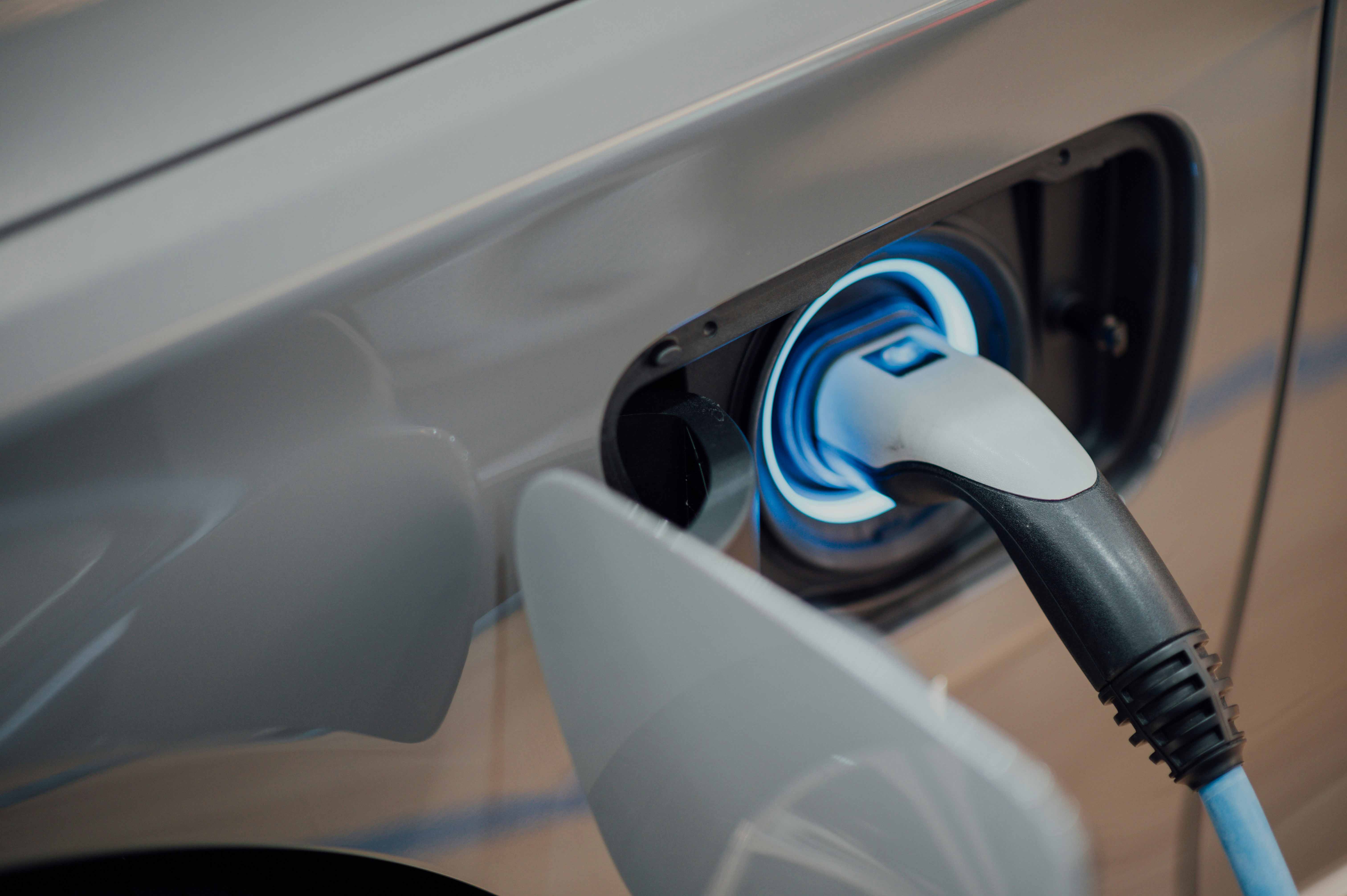
Lithium ion batteries are currently being used to power an increasingly diverse range of vehicles and equipment, and have been recognized as a critical enabling technology to make electric vehicles and hybrid electric vehicles (EV/HEV) a success. One of the challenges currently faced by the automotive industry is the lithium ion battery's low power output.
Recent research has demonstrated that diffusional phase transformation materials are promising candidates for use in high-power, rechargeable lithium-ion batteries as electrodes, due to their ability to transport lithium ions at a much higher rate, which results in a higher power output. Their qualities are not fully understood, however, because existing electroanalytical techniques and tools were designed for previous generations and types of battery materials. This problem has slowed the development of more advanced batteries for electric and hybrid vehicles for consumer use.
Wang's proposal introduces a new technique that can be used to assess phase transformation electrode materials. His research is the first effort to investigate the fundamental relationships between material chemistry, structure, composition, phase transformation kinetics, and electrochemical properties of phase transformation electrodes because it offers the necessary tools for accurate analysis. The project should lead to the optimization of the composition of phase transformation materials, as well as improve and advance the capability of electrochemists to explore next generation electrode materials.
Wang has also used his battery research to create new coursework and research opportunities for both undergraduate and graduate students, including in the department's Unit Operations Laboratory. He hopes that what the students learn will ultimately be applied to consumer endeavors, as the development and use of high-power batteries in cars and other products will reduce both pollution and dependence on foreign oil.
For another aspect of Professor Wang's battery research, see:
"C. Wang Part of Winning Nanobiotech Grant Team" »
Related Story:
"Lowe Bequest Funds Lab Innovations" »
Published July 10, 2009
Related Stories
Stories / March 6, 2019
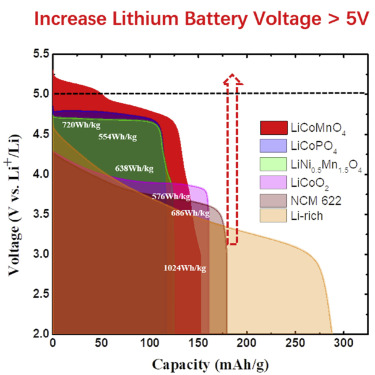
Wang Group Develops Highly Reversible 5.3 V Battery
Stories / January 14, 2019
UMD Engineers Discover Root Cause of Solid-State Battery Failure
Stories / September 7, 2017
UMD Researchers Offer Solution to Volatile Battery Chemistry in...
Stories / June 30, 2017
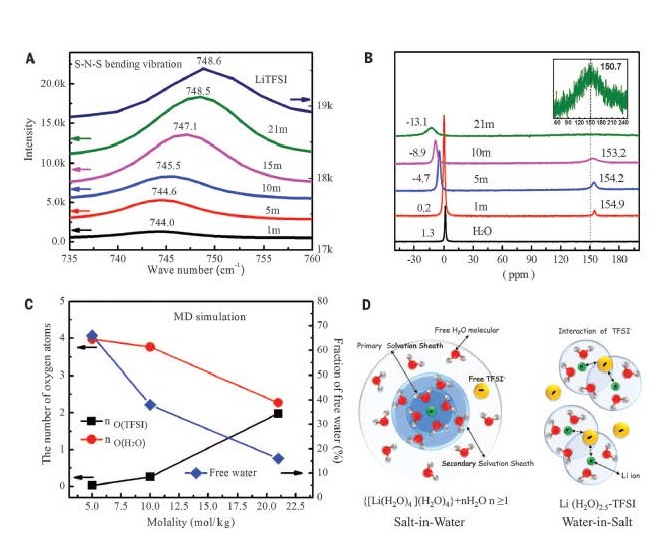
ChBE Reasearchers Offer New Salt-Water-Based Battery Chemistry
Stories / May 1, 2017
ChBE PhD Candidate Wins MRS Gold Award
Stories / January 10, 2013
New Nanocomposite Anodes Speed Battery Charging
Stories / September 5, 2012
All-In-One: $300K for Development of Interface-Free Battery
Stories / December 6, 2010
Bad Virus Put to Good Use: Breakthrough Batteries
Stories / September 20, 2010
A Longer Life for Lithium Ion Batteries
Stories / November 25, 2024
UMD Joins $50M Sodium-Ion Battery Innovation Partnership